How To Decide Which Financial Adviser To Work With

How To Decide Which Financial Adviser To Work With


Finding a financial adviser you can trust is essential for securing your financial future. With so many options available, it’s easy to feel overwhelmed. Discuss the following key aspects with any potential adviser to ensure they offer the right level of expertise and protection and align with your financial goals.

1. Qualifications and Professional Standards

When selecting a financial adviser, check their qualifications. In the UK, advisers should hold a Level 4 qualification or higher, which is the industry standard. Many UK pension providers now require all advisers—regardless of location—to meet this level.

Some advisers also hold specialist qualifications or are Chartered by professional bodies such as:

– The Chartered Institute of Securities & Investments (CISI)

– The Chartered Insurance Institute (CII)

Being chartered indicates that an adviser undergoes continuous learning, recording at least 35 hours of Continuing Professional Development (CPD) annually. This ensures they provide the most up-to-date financial advice.

2. Licensing and Regulatory Oversight

Regulation determines the level of client protection you receive. The highest standard in the EU is a full MiFID II licence, which allows advisers to provide comprehensive investment advice and ensures professional indemnity insurance in case of disputes.

Some advisers operate under an Insurance Distribution Directive (IDD) licence, which only permits them to recommend insurance-based financial products. If an adviser is offering broader investment advice without a full MiFID II license, they may be working outside regulatory guidelines.

3. Investment Strategies and Transparency

The type of investments an adviser recommends can indicate their approach to risk and ethics. Ask whether they primarily use:

✔️ Main market funds and ETFs (exchange-traded funds)

⚠️ Structured Notes (often marketed with “guaranteed returns” but carrying hidden risks)

Structured Notes can be risky and may lose value immediately after purchase. While they may yield profits in some cases, alternative investments often offer better returns with lower risk. Some advisers receive high commissions for selling these products, which may not always align with your best interests.

4. Choosing a Financial Adviser Abroad

If you’re considering a financial adviser outside the UK, be extra cautious. Licensing standards vary, and not all countries enforce strict oversight. Check whether the adviser is backed by a reputable regulatory body and offers full disclosure on investment strategies and fees.

Final Thoughts

Choosing a financial adviser is one of the most important financial decisions you’ll make.

Look for:

✅ Recognised qualifications and regulatory compliance
✅ Investment strategies that align with your risk tolerance
✅ Clear fee structures with no hidden commissions

By taking these steps, you can ensure you work with an adviser who prioritises your financial security and long-term success.

Ingenium Financial meets all the criteria outlined above, holding the highest industry qualifications, full regulatory compliance, and a commitment to ethical, client-focused financial advice.

Looking for Chartered Financial Adviser operating under full EU MiFID II licence? Get in touch with us for a free complementary consultation.


UK Inheritance Tax for Non-UK Residents: Take Action Now

UK Inheritance Tax for Non-UK Residents: Take Action Now


The UK Government’s October 2024 Budget has brought significant changes to UK inheritance tax (IHT) rules for non-UK residents. These adjustments, effective from 6 April 2025, aim to clarify tax obligations for individuals who live abroad. While primarily targeting those who may return to the UK after working overseas, these changes also provide unexpected benefits for British expatriates planning to retire abroad permanently.

Key Changes to UK Inheritance Tax for Non-UK Residents

1. Domicile Replaced by Residence-Based Rules

The most notable change is the shift from domicile-based assessments to a residence-based test for IHT. Under the new rules, a British expat who becomes non-UK resident will still have their estate subject to IHT for a “tail” period of three to ten years, depending on their duration of UK residence. After 10 years of being non-UK resident, their non-UK assets will no longer be subject to IHT.

2. Transitional Rules for Existing Non-UK Residents

Individuals who were already non-UK resident and not UK domiciled as of 30 October 2024 will benefit from transitional provisions. These rules shorten the IHT tail, offering immediate clarity and potential tax advantages for long-term expatriates.

What This Means for British Expats

Historically, individuals born with a UK domicile of origin faced challenges in losing that status. Even decades of living abroad often didn’t suffice if they couldn’t demonstrate a permanent intention to remain in another jurisdiction. This often meant that their global assets remained subject to UK IHT.
The new residence-based system simplifies matters. Expats who spend at least 10 years outside the UK can ensure their non-UK assets are excluded from IHT assessments. This provides certainty for globally mobile individuals who want clear rules about their tax obligations.

Financial Planning Opportunities

The upcoming changes highlight the importance of proactive financial planning. British expats who act now to understand their tax status and plan accordingly could benefit significantly.

Key steps include:
• Reviewing current residence status and the length of time spent abroad.
• Consulting with a qualified financial advisor to align estate planning with the new rules.
• Exploring transitional provisions for individuals already non-UK resident and non-UK domiciled.

Uncertainty for Recent Expats

For those who have been non-UK resident for less than 10 years by 6 April 2025, some uncertainty remains. The transitional rules only apply to individuals who were non-UK domiciled as of 30 October 2024. These individuals should seek expert advice to navigate the interim period and make the most of the available opportunities.

Final Thoughts

The Budget’s changes to UK inheritance tax for non-UK residents present both challenges and opportunities. For British expats, understanding the implications of the new residence-based test is crucial. With the right financial planning, many can reduce or even eliminate their IHT liabilities on non-UK assets and perhaps more importantly move as much of your assets as possible into secure and efficient structures outside of the UK.
Take action now to review your estate plan and ensure you’re fully prepared for the changes coming in April 2025.

Contact Ingenium Financial for a full-range professional support.


Want to know more about the recent UK Budget changes? See a range of articles from HMRC here.

An Ultimate Guide to the Financial Portal in Portugal

An Ultimate Guide to the Financial Portal in Portugal

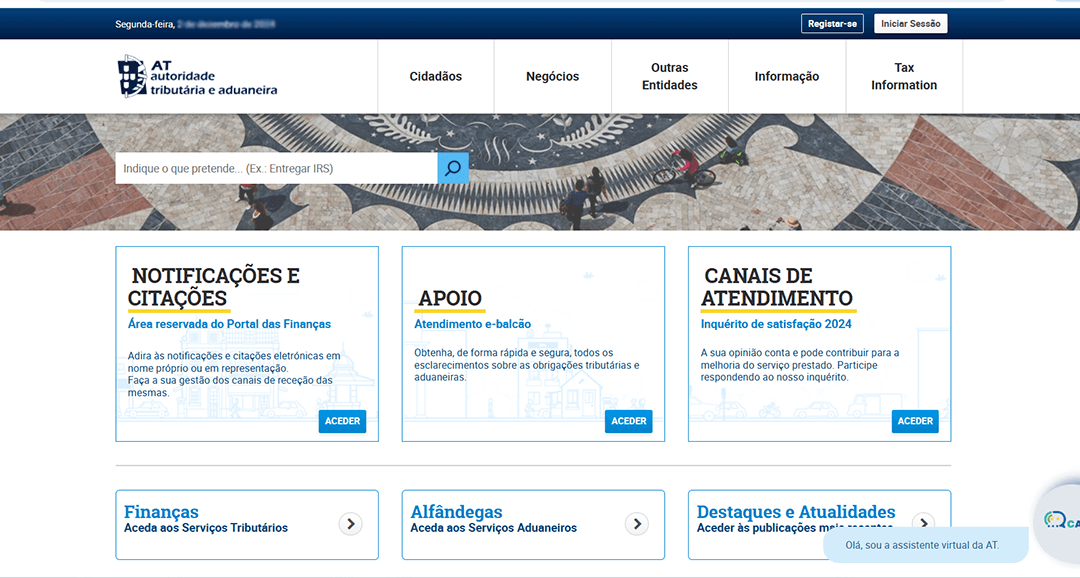
The Financial Portal in Portugal, commonly referred to as the Portal das Finanças, serves as a crucial online resource for individuals and businesses to manage their tax and financial obligations in Portugal. It is designed to streamline interactions with the Portuguese Tax Authority (Autoridade Tributária e Aduaneira). This user-friendly platform eliminates the need for frequent visits to tax offices by providing a comprehensive suite of online services. Whether you’re a resident, non-resident, or business owner, this guide will help you understand the portal’s features, registration process, and its value.

What is the Financial Portal in Portugal?

The Portal das Finanças is the official platform of the Portuguese Tax Authority (Autoridade Tributária e Aduaneira). It allows users to efficiently manage taxes, track financial information, and access essential tax-related services. With its centralised approach, the portal is indispensable for tasks such as filing tax returns, requesting tax certificates, and paying property or vehicle taxes.

Accessing the Portal das Finanças: Registration Explained Simple

For Residents:

Visit https://www.portaldasfinancas.gov.pt/

Choose Registar-se in the top right corner.

Choose  Registo NIF, input your NIF number and confirm by pressing Registo NIF.

Fill out the required information.

Password Delivery: Upon successful registration, your password will be sent via post to your registered Portuguese address. Check your post box in about two weeks after the application. There is no option to receive the password via e-mail, sms, etc.

Use this password for your initial login.

About NIF number

NIF is your tax number, ‘número de identificação fiscal’ or  ‘número de contribuinte’. Usually, you obtain NIF number while applying for residency in Portugal. A non-resident needs to have a fiscal representative (individual or collective) to obtain NIF. Applying for a NIF is free of charge. Necessary documents: Identification document.

For Non-Residents:

Non-residents engaging in financial activities in Portugal, such as property ownership, can also register. However, they are typically required to appoint a fiscal representative. This representative ensures compliance with Portuguese tax laws and acts as a liaison with the tax authorities.

Note: While the portal can send the initial password to international addresses, delays are common. A fiscal representative can simplify and expedite this process.

Why a Fiscal Representative Might Be Necessary

A fiscal representative is an otion for:

Non-residents conducting financial activities in Portugal.

Individuals with tax obligations but no Portuguese residential address.

Fiscal representatives handle correspondence with the tax authorities and ensure compliance with tax regulations, providing peace of mind to those residing abroad.

Are you looking for a fiscal representative or experiencing difficulties with the portal da finanças? Contact Ingenim Financial and we connect you to our trusted partners who can assist.

Want to know more about NIF? See our article here.

Services Offered by the Financial Portal in Portugal (Portal das Finanças)

The Portal das Finanças provides a wealth of services, empowering users to handle a variety of tasks efficiently. Here are some key functionalities:

  1. Tax Returns (IRS):

File your annual income tax return with ease. The portal often provides pre-filled forms, making the process quicker and more accurate.

  1. VAT and Corporate Taxes:

Businesses can use the portal to declare and pay VAT or corporate taxes, ensuring compliance with reporting deadlines.

  1. Property Tax (IMI):

View, calculate, and pay your annual property tax. The platform also notifies users of upcoming payment deadlines.

  1. Vehicle Tax (IUC):

Car owners can manage their annual vehicle tax directly through the portal, avoiding delays or penalties.

  1. Tax Compliance Certificates

Request official certificates for proof of tax compliance, often required for financial transactions like loans or real estate dealings.

  1. Expats and Foreign Income:

Expatriates can declare foreign income and apply for benefits such as the Non-Habitual Resident (NHR) tax scheme, which provides tax incentives for new residents.

  1. Obtaining other references and declarations

From the financial portal Portugal you can obtain and download  Proof of Address, Certificate of Tax Residency, Income Declarations and Statements, and more.

Benefits of Using the Financial Portal in Portugal  (Portal das Finanças)

The Portal das Finanças is a vital tool for anyone interacting with the Portuguese tax system. Its benefits include:

Convenience: Conduct all financial and tax-related tasks online.

Transparency: Easily access detailed records of your tax obligations and payments.

Efficiency: Avoid long queues at physical tax offices by completing processes digitally.

Common Issues and Support Options

If you face issues such as forgotten passwords or difficulty accessing the portal:

Use the password recovery feature on the portal, ensuring your address on file is correct.

Contact the Portuguese Tax Authority support team at +351 217 206 707 for assistance.

Visit a local Serviço de Finanças for in-person support if required.

See the contact information of the offices of Serviço de Finanças  in Algarve:


Direcção de Finanças de Faro

Cmte. Francisco Manuel 3A, 8000-269 Faro

Floor 0. Municipal Market of Faro

Mon.-Fri. 9:00 – 4:30 pm


Serviço de Finanças de Loulé 1

Address: R. das Portas do Céu 854, 8100-522 Loulé

Mon.- Fri. 9:00 -3:30 pm


Serviço de Finanças de Loulé 2

Address: R. São Tomé e Príncipe 254, 8125-507 Quarteira

Mon.-Fri. 9:00 am – 3:30 pm


Repartição de Finanças de Albufeira

Address: 184, R. das Telecomunicações 2, Albufeira

Mon.-Fri. 9:00 am – 3:30 pm


Serviço de Finanças de São Brás de Alportel

Address: R/C, R. Boaventura Passos 8, 8150-121 São Brás de Alportel

Mon.-Fri. 9:00 am – 3:30 pm


Repartição de Finanças de Olhão

Address: 8700-371 Olhão

Mon.-Fri. 9:00 am – 3:30 pm


Serviço de Finanças de Tavira

Address: 4 8801-, R. Amália Rodrigues 3, Tavira

Mon.-Fri. 9:00 am – 3:30 pm


Serviço de Finanças de Castro Marim

Address: r/c, R. de São Sebastião 12, 8950-122 Castro Marim

Mon.-Fri. 9:00 am – 3:30 pm


Serviço de Finanças de Vila Real de Santo António

Address: R. de Angola 39 A 1º, 8900-271 Vila Real de Santo António

Mon.-Fri. 9:00 am – 3:30 pm


Serviço de Finanças de Silves

Address: R. Cândido dos Reis 1 R/C, 8300-126 Silves

Mon.-Fri. 9:00 am – 3:30 pm


Serviço de Finanças de Lagoa

Address: 8401-852, R. do Viveiro 5, 8400-418 Lagoa

Mon.-Fri. 9:00 am – 3:30 pm


Serviço de Finanças em Portimão

Address: R. Fernando da Piedade Dias Castelo B, 8500-506 Portimão

Mon.-Fri. 9:00 am – 3:30 pm


Serviço de Finanças de Lagoa

Address: 8401-852, R. do Viveiro 5, 8400-418 Lagoa

Mon.-Fri. 9:00 am – 3:30 pm


Serviço de Finanças de Monchique

Address: b, R. Serpa Pinto 35, 8550-467 Monchique

Mon.-Fri. 9:00 am – 3:30 pm


Serviço de Finanças de Vila do Bispo

Address: 407, Vila do Bpo.

Mon.-Fri. 9:00 am – 3:30 pm


Serviço de Finanças de Aljezur

Address: R. 25 de Abril 93, 8670-088 Aljezur

Mon.-Fri. 9:00 am – 3:30 pm


Repartição Finanças de Alcoutim

Address: Av. de Duarte Pacheco 2, 8970-071 Alcoutim

Mon.-Fri. 9:00 am – 3:30 pm


Conclusion

The Financial Portal in Portugal, or Portal das Finanças, is a game-changing resource for managing financial and tax-related matters in Portugal.

Trusted partners of Ingenium Financial provide full-range support in any issue you might experience with financial portal or the Tax and Customs Authority office.  Find out how we cooperate with other professionals and get in touch for more information.

How to Pay ZERO Inheritance Tax for British in Portugal

How to Pay ZERO Inheritance Tax for British in Portugal

New UK Inheritance Tax Rules: What They Mean for British Retirees in Portugal

The recent overhaul of the UK’s inheritance tax (IHT) rules brings significant opportunities for British expatriates, especially retirees residing in Portugal. These changes could drastically reduce tax burdens on global assets for those living abroad long-term. Below is a detailed look at how these updates impact inheritance tax for British in Portugal.

Key Changes to UK Inheritance Tax (IHT) Rules

Previously, UK inheritance tax applied to all British nationals with a UK domicile, covering their global wealth, regardless of residence. The newly introduced system shifts from domicile-based taxation to a residency-based approach, which offers considerable relief for long-term expatriates.

  1. Exemption for Long-Term Residents Abroad
    • British nationals residing outside the UK for over 10 years will no longer pay IHT on their foreign assets. See recent article from Deloitte, scroll to Long Term Resident rule replaces domicile  paragraph 2.
    • This rule applies even to individuals who have previously struggled to shed their UK domicile due to the rigid “domicile of origin” rules.
  2. Streamlined Non-Dom Status
    • Acquiring a “domicile of choice” in another country used to involve complicated procedures. The new rules simplify this by aligning taxation with physical residency.

 Inheritance Tax for British in Portugal:

Benefits

Portugal is a top destination for British retirees due to its favourable tax environment and high quality of life. With the updated UK rules:

  • Foreign Assets are Exempt from UK IHT
    Retirees in Portugal with investments, properties, or savings outside the UK are free from UK IHT after residing abroad for 10 years.
  • Simplified Estate Planning
    Retirees can now focus estate planning on Portuguese laws, which levy no inheritance tax for direct family members such as children and spouses. Instead, a Stamp Duty of 10% may apply to other heirs.
  • Increased Financial Freedom
    The changes might encourage British retirees to diversify wealth internationally without worrying about UK tax implications on those assets after death.

Navigating Portuguese Taxation

While the UK tax changes are beneficial, it’s essential to understand Portuguese inheritance tax laws:

  • No Traditional Inheritance Tax
    Portugal exempts direct descendants and spouses from inheritance taxation. Other heirs may face a Stamp Duty, but foreign assets are typically excluded.
  • Residency and Wealth Tax Considerations
    Retirees should ensure they comply with Portuguese residency requirements to fully benefit from local tax laws.

Long-Term Implications

These reforms provide a clearer path for British retirees to secure their financial legacy. However, the 10-year residency requirement poses a key planning consideration. For those contemplating retirement in Portugal, the tax advantages can outweigh the commitment of a decade abroad.

Practical Steps for British Retirees

  1. Establish Residency in Portugal
    Begin the residency process early to start the 10-year clock for foreign asset IHT exemptions.
  2. Optimise Estate Structures
    • Consolidate UK assets or consider transferring wealth away from the UK and optimise their future Portuguese liabilities.
    • Draft a Portuguese will to align estate planning with local laws.
  3. Seek Professional Advice
    Engage tax experts with experience in both UK and Portuguese systems to navigate complexities and ensure compliance.

Inheritance Tax for British in Portugal: Why These Changes Matter

These tax reforms have introduced a once-in-a-generation opportunity for British retirees to restructure their finances. With the favourable residency laws in Portugal and exemptions on foreign assets, retirees can now enjoy peace of mind about their inheritance tax liabilities.

Contact Ingenium Financial, fully qualified to provide pension advice for British expats in Portugal.


How to Avoid Double Taxation for Your UK Pension in Portugal

How to Avoid Double Taxation for Your UK Pension in Portugal

Managing your pension when retiring abroad involves navigating complex tax rules. For British retirees in Portugal, obtaining an NT (Nil Rate) Tax Code is essential for efficient UK pension tax management and avoiding double taxation This guide explains what the NT Tax Code is, its significance for UK pension income in Portugal, and how to apply for one.

What is an NT Tax Code?

An NT Tax Code for UK Pensions ensures that pension withdrawals are paid gross, without UK income tax deductions. For UK residents, pensions exceeding the tax-free allowance of £12,570 p.a. (2024/25) are taxed under PAYE. However, if you reside in a country like Portugal that has a Double Taxation Agreement (DTA) with the UK, the NT Tax Code prevents you from being taxed twice.

Important Note: Although UK taxes are avoided, pension income must still be declared and taxed in Portugal under local rules. Consult a tax expert to align with Portugal pension tax planning requirements.

Why Do British Retirees Need an NT Tax Code for UK Pension in Portugal?

Retiring in Portugal offers benefits like mild weather and a favourable cost of living, but tax compliance remains a critical consideration. Here’s why the NT Tax Code matters for retirees:

  • Avoid Double Taxation: Without an NT code, UK pension providers deduct tax at source. This tax would need to be reclaimed while also paying Portuguese taxes.
  • Simplify Finances: Receiving gross payments allows for better financial planning.
  • Prevent Overpayment: The NT Tax Code avoids unnecessary deductions caused by emergency tax codes or PAYE rules.

How to Apply for an NT Tax Code

Step 1: Verify Your Tax Residency

Complete the appropriate Double Taxation Form to confirm you’re a tax resident in Portugal. Specific forms vary:

For Portugal and some other countries they are generic forms.

You’ll need details like your Pension Reference Number, which can be obtained from your pension provider.

Step 2: Submit Your Application to HMRC

See full guidance and access the latest forms at GOV.UK, click here.

If you’ve already left the UK, fill in form P85 online. If you haven’t already left the UK or don’t want to use the online system, download and fill in form P85.

The first step is now a series of questions which essentially take you through the UK Standard Residency Test, this is the UK a making sure that you are definitely no longer tax resident and therefore liable for UK taxes.

If you want to familiarise yourself with the SRT see the information on gov.uk, or click here.

Step 3: Processing Time

Expect a wait of 3–6 months for approval. Applying online minimises delays.

Step 4: Update Your Pension Provider

Once approved, the NT code appears in your Government Gateway account. Inform your pension provider to activate it.

Understanding UK Pension Tax in Portugal

Even after receiving your NT tax code, the initial pension withdrawal may still be taxed. This happens because the pension trustee must verify the NT code with HMRC before applying it. To avoid surprises, it’s recommended to test the system with a smaller withdrawal initially.

Each pension scheme requires its own NT tax code. If you hold multiple pensions, separate applications are necessary. However, consolidating these pensions into a single scheme may simplify tax management and administration.

It’s possible to withdraw up to £1,000 per month without an NT code and avoid UK taxation, provided no emergency tax code is active. However, such withdrawals do not exempt you from local tax obligations in Portugal, where your pension income must still be reported and taxed accordingly.

Eligible pensions for the NT tax code include UK Personal Pension Plans, Defined Contribution Schemes, and SIPPs (Self-Invested Personal Pensions), including International SIPPs. However, the NT code does not apply to QROPS (Qualifying Recognised Overseas Pension Schemes) as these should pay out on a gross basis.

By understanding these nuances, you can better manage your pension income, ensuring compliance with both UK and Portuguese tax regulations.

NT Tax Code: Essential step to avoid double taxation

Obtaining an NT Tax Code for UK Pensions is a vital step for British retirees in Portugal to avoid double taxation and simplify pension management. While the process requires patience, the long-term financial benefits make it worthwhile.

If you’re unsure about tax regulations, consult Ingenium Financial, experts in Portugal pension tax planning. We provide comprehensive, up-to-date and qualified guidance.  Ingenium Financial operate under a full EU licence (MiFID II), recognised by leading pension providers.